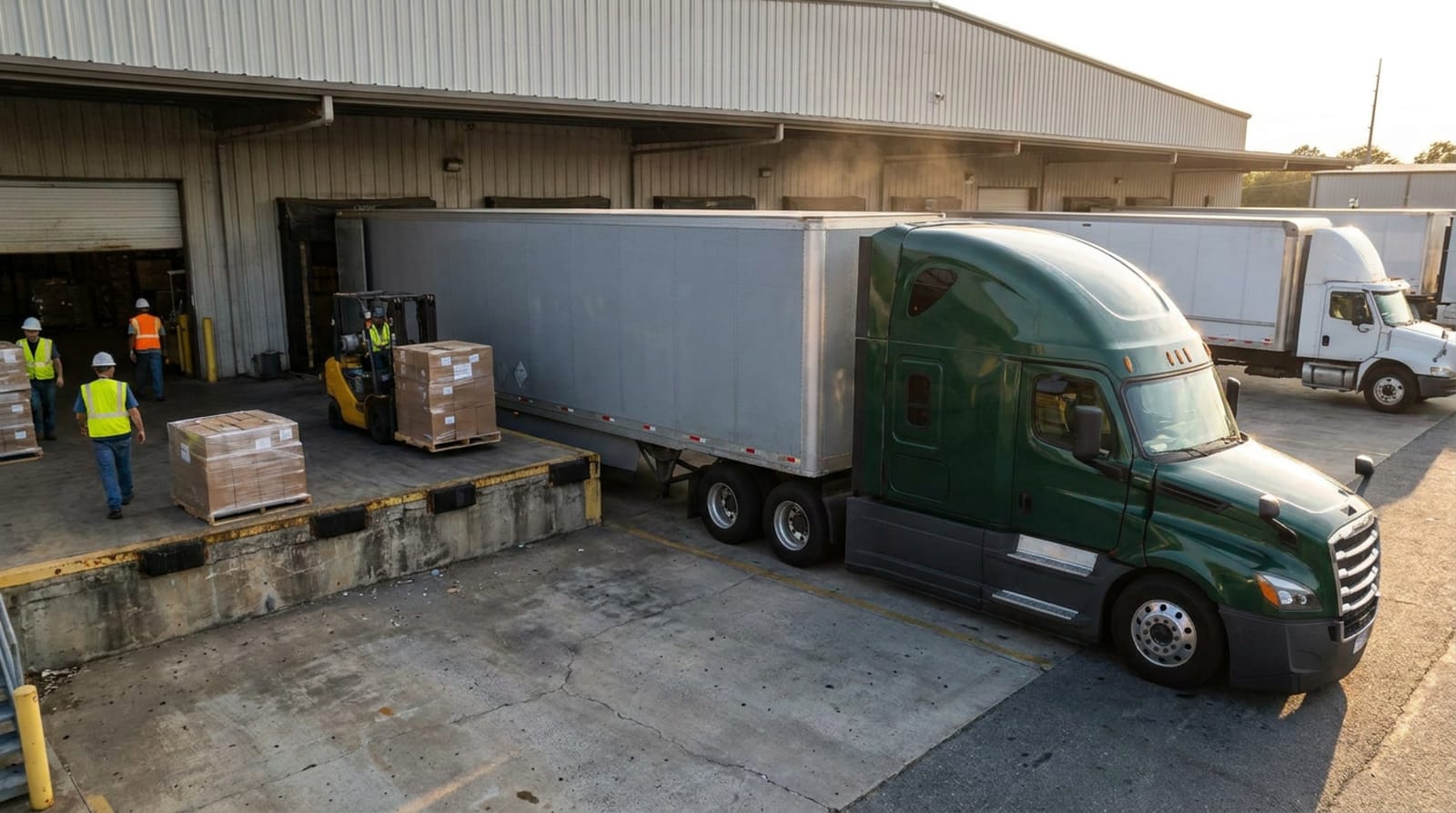
What Is Freight Class?
Freight class is a standardized rating system created by the National Motor Freight Traffic Association (NMFTA). It assigns every commodity a class number ranging from 50 to 500. The class number directly affects the rate a carrier charges for moving that commodity via LTL — lower class numbers generally mean lower cost per hundredweight, higher numbers mean more. This system exists because not all freight is equally easy or efficient to move.
The classification system groups thousands of individual products under NMFC (National Motor Freight Classification) item numbers. Each item number carries a specific class — or a density-based scale that lets you calculate the class from the shipment's actual density. When you hand freight to a carrier, the class you declare on the bill of lading is the starting point for the rate calculation.
If you are new to LTL, our FTL and LTL services page explains when LTL makes sense versus booking a full truckload, which can simplify billing by eliminating class altogether.
The Four Factors Behind Every NMFC Assignment
The NMFTA evaluates commodities on four characteristics when assigning a class. Density measures how many pounds fit into a cubic foot of space — denser freight is cheaper to ship because it uses trailer space efficiently. Stowability measures how easily the freight can be loaded alongside other shipments without wasting space or causing damage.
Handling reflects how much labor and special equipment a commodity requires to load, secure, and unload safely. Liability accounts for the risk of damage, theft, or perishability inherent in the product. A pallet of steel bolts scores well on all four factors and lands in Class 50 or 55. A pallet of ping-pong balls is bulky, light, and awkward to stack — it may reach Class 150 or higher.
Most shippers focus only on weight and forget about density. A common rule of thumb: freight that weighs fewer than 6 pounds per cubic foot will typically land in a high class (125–500). Freight above 30 pounds per cubic foot often hits Class 55–65. Calculate your cubic feet by multiplying length times width times height in inches and dividing by 1,728.
The 18 Freight Classes at a Glance
The NMFC system uses 18 standard class designations: 50, 55, 60, 65, 70, 77.5, 85, 92.5, 100, 110, 125, 150, 175, 200, 250, 300, 400, and 500. Class 50 covers dense, easy-to-handle commodities like scrap metal or sand. Class 500 represents the most challenging freight — low-density, high-liability, or difficult-to-stow items like bags of gold dust or ping-pong balls.
- Class 50–65: Dense, durable goods — metal parts, hardwood floors, bricks.
- Class 70–85: Auto parts, food items, appliances in crates.
- Class 92.5–125: Electronics, refrigerators, cast iron furniture.
- Class 150–300: Sheet metal, mattresses, wooden cabinets.
- Class 400–500: Deer antlers, ping-pong balls, bags of precious metals.
Some NMFC items carry a fixed class regardless of density. Others use a density scale — your class depends on what you actually ship. Knowing which type applies to your commodity is essential before you print a bill of lading. When in doubt, the NMFTA's official classification database is the authoritative source.
Why Reclassification Charges Hurt
When a carrier's dock crew or inspector believes your declared class is wrong, they measure and re-weigh the freight and apply what they determine to be the correct class. This is called a reclassification. The result is an adjusted invoice — usually significantly higher than the original quote. Some reclassification charges also include an inspection fee on top of the rate difference.
Reclassification is not rare. Shippers who guess at class or copy a class from a similar product without confirming the NMFC item number face it regularly. It also creates paperwork: you have to decide whether to dispute or accept the carrier's finding, and disputes take time to resolve. Meanwhile, the carrier may hold payment or delivery until the billing is settled.
The best defense is accuracy upfront. Measure your pallets carefully — length times width times height including any overhang. Weigh on a calibrated scale. Look up the NMFC item number for your specific product. Our team at Green Lantern Trucking can review your commodity with you before pickup — reach us at (619) 625-0147.
Density-Based vs. Fixed Class Items
Many shippers assume every product has a fixed class. In reality, a large portion of NMFC items use a density-based scale, which means the class can vary shipment to shipment depending on how the freight is packaged. A commodity shipped loose may be Class 100. The same commodity palletized and shrink-wrapped may calculate to Class 70 because the packaging improves density.
This is important for shippers who repackage products or use different pallet sizes across orders. Two shipments of the same SKU can legitimately carry different classes if one is denser than the other. Keeping packaging consistent helps keep freight class predictable and makes rate shopping easier.
If your commodity uses a density scale, use this formula: divide total weight in pounds by total cubic feet. That gives you pounds per cubic foot. Then look up where that density falls on the density scale in the NMFC item description to find your class. For help understanding how this interacts with LTL pricing, our article on what drives freight shipping costs covers the full rate-building picture.
How to Classify Your Freight Correctly
Start with the product name and look it up in the NMFC directory. The NMFTA publishes the official classification guide, available to subscribers. Many LTL carriers and third-party tools also offer class lookup databases. Find the NMFC item number that most specifically matches your commodity — generic categories exist but specific items always take precedence.
Once you have the item number, read the class rules. If it is a fixed class, you are done. If it uses a density scale, calculate your density using the method above and find your class on the scale. Record the NMFC item number and class on your bill of lading. If the shipper and carrier agree on the class from the start, reclassification risk drops sharply.
Green Lantern Trucking moves LTL freight across all 48 contiguous states from our San Diego hub. Our dispatch team is available 24/7 and can answer classification questions before your shipment is scheduled. Accurate freight class means accurate quotes, cleaner invoices, and faster movement through the network.
NMFC Codes and LTL Quotes
When you request an LTL quote, carriers use the freight class, origin zip, destination zip, and weight to calculate a rate from their tariff. The tariff assigns a base rate per hundredweight for each class between each origin-destination pair. Accessorial charges — liftgate, residential delivery, inside pickup — stack on top of the base rate.
Getting the class right means the quote you receive is actually the rate you will pay. A class that is too low produces a low quote but almost guarantees a reclassification invoice later. A class that is too high means you overpay unnecessarily. Neither outcome is good for your freight budget or your relationship with your carrier.
We also offer FTL options for shipments large enough that booking the whole trailer eliminates the class question entirely — full truckload pricing is weight- and mileage-based, not class-based. Read more about choosing between options on our FTL vs LTL guide or request a quote directly and let our team find the right solution for your lane.