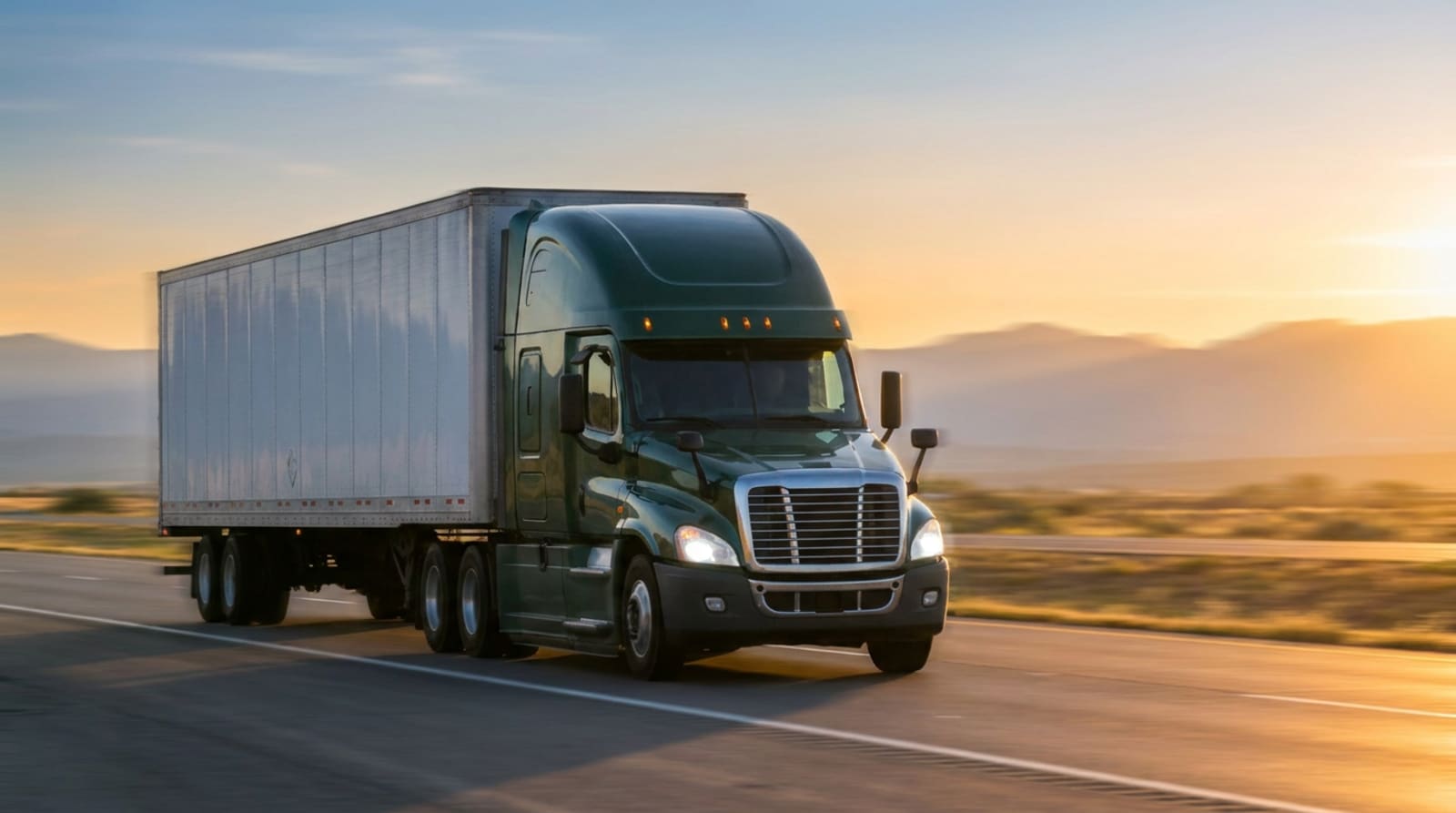
What Is a Dedicated Freight Lane?
A dedicated freight lane is a contractual arrangement between a shipper and a carrier in which the carrier reserves trucks, drivers, and capacity specifically for the shipper's recurring route. Instead of booking freight load by load on the open market, the shipper commits to a defined volume over a set period, and the carrier commits to showing up with equipment every time.
Dedicated lanes work best when a shipper has predictable, repeating freight between two or more fixed points. A manufacturer that ships from its Southern California plant to distribution centers in Arizona and Nevada every Monday and Thursday is a natural candidate. The volume is there, the route is fixed, and the scheduling is consistent enough to justify reserving capacity.
This arrangement differs from a standard contract rate — which sets pricing but not capacity — because the carrier actually assigns equipment and drivers to the lane. The shipper is not competing for trucks on a given day. Green Lantern Trucking operates as an asset-owned carrier, meaning we own the equipment in our dedicated arrangements, not a broker sourcing trucks from a fragmented network.
The Spot Market Problem Dedicated Lanes Solve
The spot market is efficient for one-off or unpredictable shipments. It is inefficient — and often expensive — for freight that moves the same route week after week. Spot rates fluctuate based on regional truck supply, fuel, weather, and national demand cycles. During tight capacity periods, spot rates can spike sharply and shippers with no committed capacity scramble to find trucks at any price.
Even when spot rates are low, the unpredictability creates hidden costs. Procurement staff spend time sourcing carriers for each load. Service performance varies because you are working with different drivers and trucking companies on each booking. Carrier onboarding, insurance verification, and rate negotiation repeat constantly. These administrative costs add up quickly for a shipper with high-frequency lanes.
A dedicated lane eliminates that churn. One negotiation, one set of terms, one carrier, one set of drivers who know your facility and your freight. The operational friction drops significantly, and so does the management overhead. For a deeper look at how pricing works outside of dedicated arrangements, our post on what drives freight shipping costs breaks down spot and contract rate mechanics.
Asset Carrier vs. Broker in a Dedicated Arrangement
When evaluating dedicated lane proposals, the distinction between an asset-owned carrier and a freight broker matters more than most shippers realize. A broker arranging a "dedicated" lane is still sourcing trucks from the open carrier market — the commitment is in the contract, not in owned equipment. If the broker's capacity sources tighten up or exit the arrangement, your dedicated lane has a problem.
An asset-owned carrier like Green Lantern Trucking controls the trucks. Our drivers are our drivers. Our trailers are our trailers. When we commit a truck to your lane, that commitment is backed by physical equipment we own and maintain — not a network of sub-haulers we source on the fly. That distinction shows up most clearly when capacity is tight: our dedicated customers move while spot shippers wait.
For a full breakdown of how asset carriers and brokers operate differently across all service types, see our post on asset carrier vs. freight broker. The difference in accountability and service reliability is significant.
How Dedicated Lanes Lower Per-Load Cost
Dedicated lane pricing is typically structured as a flat rate per load or per mile over the contract period. Because the carrier knows the route, the volume, and the schedule in advance, they can optimize driver scheduling, reduce empty miles, and plan fuel efficiently. Those savings get passed to the shipper through more predictable, often lower per-load pricing than equivalent spot market bookings.
Empty miles — miles a truck runs without a load — are a major carrier cost. On a dedicated lane, carriers can design round-trip or triangulated routes that minimize deadhead. If your outbound lane pairs well with another shipper's inbound lane on the same corridor, the carrier can structure a back-haul that reduces the cost of each individual move. Asset carriers with established networks are best positioned to find those pairings.
- Predictable per-load pricing removes budget variance from recurring lanes.
- Reduced empty miles lower carrier operating cost, which can translate to better rates.
- Fewer carrier transitions cut administrative overhead on the shipper side.
- Volume commitment gives carriers incentive to offer competitive contract pricing.
- Long-term relationships often unlock priority service during capacity crunches.
Service Quality Benefits Beyond Cost
Cost savings are the headline, but the service quality gains from a dedicated lane arrangement often deliver equal or greater value. Consistent drivers who know your facility learn where to back in, who to call at the dock, how your freight is staged, and what your special handling requirements are. That institutional knowledge reduces loading errors, shortens dwell time, and cuts cargo damage claims.
Transit time reliability also improves. Dedicated lane drivers run the same route regularly and understand the traffic patterns, scale stations, and rest stop options along the corridor. They can anticipate delays and route around them more effectively than a driver running the lane for the first time. For time-sensitive shippers, that reliability has direct value — fewer missed delivery windows, fewer chargebacks from retail partners.
Green Lantern Trucking dispatches 24/7, so your dedicated lane does not go dark when the clock hits 5 PM. Whether you need a driver update at midnight or a schedule change on a holiday weekend, our team is reachable. Our drivers cover all 48 contiguous states from our Southern California hub, giving us strong positioning on West Coast origin lanes in particular.
What Lanes Work Best for Dedicated Arrangements
Not every lane is a strong candidate for a dedicated arrangement. The economics work best when three conditions are present: the lane runs at least two to three times per week, the route is fixed between the same origin and destination points, and the freight volume is predictable enough to commit to on a contract basis. Erratic or seasonal-only lanes are harder to structure as dedicated.
High-frequency lanes from major distribution hubs — Los Angeles, San Diego, Phoenix, Las Vegas, Dallas, Chicago — to regional DCs are the most common dedicated lane structures. Port-adjacent lanes that move containers from marine terminals to inland warehouses are also a strong fit, particularly in Southern California where port volume is consistent. Our port drayage service connects directly with dedicated inland movements for importers with recurring container volume.
Reefer lanes — refrigerated freight that moves on a regular schedule — benefit especially from dedicated arrangements because temperature control adds complexity that is better managed through a consistent carrier relationship. Learn more about how we handle temperature-sensitive freight on our reefer shipping guide.
Getting Started with a Dedicated Lane
Setting up a dedicated lane starts with data. Pull your shipping history and identify routes you run more than twice a week. Document the origin and destination zip codes, the average load weight and size, the freight type, and the days of the week you typically move. That data package gives a carrier enough to structure a realistic proposal.
From there, the conversation covers equipment type — dry van, reefer, or flatbed — driver requirements, any special facility access needs, and the term length you are comfortable committing to. Longer commitments give carriers more certainty and typically produce better pricing. Shorter terms offer more flexibility but may carry a premium.
Green Lantern Trucking builds dedicated lane programs for shippers across all 48 contiguous states. Call us at (619) 625-0147 to talk through your lanes, or visit our services page to see the full range of freight solutions we operate. Freight that always finds the light — that is the commitment behind every dedicated lane we run.