What Is a Reefer Trailer?
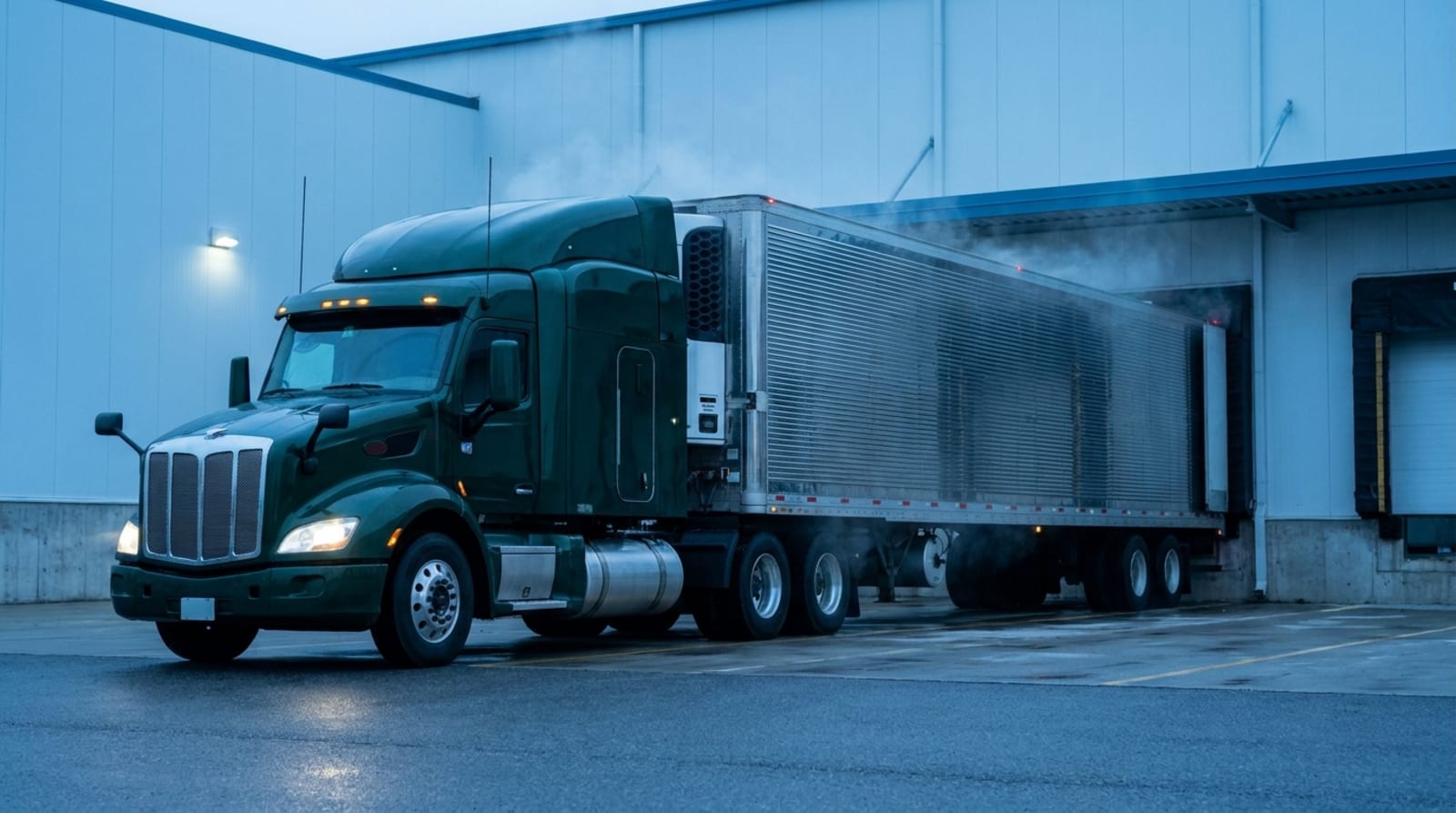
A reefer trailer is a temperature-controlled freight trailer equipped with a diesel-powered refrigeration unit mounted on the nose of the trailer. That unit cycles continuously during transit to maintain a set temperature inside the cargo space. Modern reefer units can maintain temperatures ranging from well below freezing to above ambient, depending on what the freight requires.
The refrigeration unit is separate from the truck's engine, which means it operates while the truck is parked, idling, or moving. This matters because a shipment that sits at a dock for several hours while awaiting unloading still needs to stay within its required temperature range. A properly functioning reefer unit handles that automatically, but the shipper and receiver both need to understand that responsibility doesn't end when the truck arrives.
Reefer trailers look similar to standard dry van trailers from the outside, but the internal lining is thicker to provide insulation, and the floor has channels that allow cold air to circulate beneath pallets. Those design differences mean maximum cargo dimensions are slightly smaller than a comparable dry van trailer — something to account for when planning a reefer load.
What Types of Freight Require Reefer Service?
The most common reefer freight categories are fresh and frozen food, pharmaceutical products, and certain industrial chemicals. Fresh produce — vegetables, fruit, flowers, and nursery stock — typically requires temperatures between 34°F and 55°F depending on the commodity. Frozen food runs at 0°F or below. Dairy and meat each have their own specified ranges, and mixing incompatible commodities in a single trailer is generally not allowed.
Pharmaceuticals are one of the fastest-growing reefer freight categories. Many medications, biologics, and medical supplies require strict temperature control, and regulatory requirements around pharmaceutical cold chain are stringent. A temperature excursion — even a brief one — can render a shipment unusable and create compliance exposure for the shipper.
- Fresh produce: 34–55°F depending on commodity
- Frozen food: 0°F and below
- Dairy and meat: commodity-specific ranges, usually 28–36°F
- Pharmaceuticals and biologics: typically 36–46°F (2–8°C) for refrigerated products
- Floral and nursery: 34–50°F
- Industrial chemicals: varies widely by product — confirm requirements before booking
How Reefer Rates Are Calculated
Reefer rates are higher than dry van rates for the same lane and weight. That difference reflects real costs: the refrigeration unit burns additional fuel continuously, reefer trailers cost more to purchase and maintain, and temperature monitoring adds an operational layer that dry van does not require. Shippers who try to cut costs by using dry van for freight that needs reefer take on significant risk — spoilage, rejection at delivery, and potential regulatory consequences.
The same factors that drive dry van rates also apply to reefer — distance, weight, freight class, fuel prices, and lane supply and demand. Our post What Drives Freight Shipping Costs covers those variables in detail. For reefer, add the continuous fuel consumption of the refrigeration unit and any stop-off fees if the load requires multiple delivery points.
One cost factor shippers sometimes overlook is pre-cooling time. A reefer trailer needs to be brought down to the required temperature before loading — loading warm product into a warm trailer that is then cooled wastes time and can stress the product. Some carriers charge a pre-cool fee; others build it into the rate. Ask before you book so there are no surprises.
Shipper Responsibilities in a Reefer Move
A reefer carrier maintains temperature during transit, but shippers carry real responsibilities that affect the outcome of the shipment. Product must be at the required temperature before it is loaded. Loading warm product and expecting the reefer unit to bring it down to temperature during transit is not how refrigerated transport works — reefer trailers are designed to maintain temperature, not to rapidly chill warm freight.
Packaging matters too. Freight that is not properly packaged to allow air circulation around pallets will develop hot spots regardless of what the unit is set to. Pallet height, stacking pattern, and the use of slip sheets all affect airflow. If you have questions about packaging standards for your specific commodity, talk to your carrier before the load is built.
Accurate temperature documentation at pickup is also a shipper responsibility. Note the product temperature and the trailer temperature at the time of loading on the bill of lading. If there is a dispute about condition at delivery, that documentation is your baseline. See our post How to Prepare a Shipment for Pickup for broader guidance on BOL documentation and freight preparation.
Continuous Monitoring and Temperature Records
Modern reefer operations include temperature recorders that log the trailer's internal temperature throughout the haul. These records matter for pharmaceutical shippers who operate under GDP (Good Distribution Practice) guidelines, for food shippers who need to document cold chain integrity, and for any shipper who needs to demonstrate that their freight was handled correctly if a claim arises.
Green Lantern Trucking operates as an asset carrier, which means we control and monitor our own reefer equipment. There is no relay to a third-party carrier who might have different monitoring practices or equipment standards. When you book a reefer load with us, the temperature record comes from our trailer's recorder, and that record stays with the shipment.
Reefer shipping is a specialized service. Compare it against our other service offerings on the Services page to understand the full range of equipment types available. If your freight requires flatbed or heavy haul instead of, or in addition to, temperature control, see our Specialized Services page for details.
Reefer Shipping from Southern California
Southern California and San Diego County are major origin points for reefer freight. The region produces fresh citrus, avocados, flowers, and nursery plants. The Inland Empire and Los Angeles Basin are major distribution points for imported produce moving to the rest of the country. San Diego's biotech and pharmaceutical corridor generates cold chain freight heading to markets across the U.S.
Green Lantern Trucking is based in Dulzura, CA, in southern San Diego County, which positions us well for reefer pickup in San Diego, the Inland Empire, and the broader Southern California market. Our post Shipping Freight Out of San Diego covers the region's freight geography in detail, including port drayage and outbound lanes to major markets.
We dispatch reefer equipment 24/7, which matters for perishable freight that cannot wait for a Monday morning call. Time-sensitive produce, pharmaceutical cold chain, and temperature-sensitive chemicals all need a carrier who can respond when the load is ready, not when the office opens.
Booking a Reefer Load with Green Lantern Trucking
When you call to book a reefer load, have the following information ready: origin and destination, pickup and delivery dates, commodity type, required temperature range, total weight, pallet count, and any special handling requirements. The more specific you are upfront, the faster we can confirm equipment and rate.
Call us at (619) 625-0147 — dispatch is available around the clock. You can also request a quote through our online quote form. We cover all 48 contiguous states and can handle reefer loads ranging from partial to full truckload. If you're not sure whether reefer is the right service for your freight, tell us what you're shipping and we'll tell you what equipment it needs.
For shippers who are new to temperature-controlled freight and want to understand how it compares to standard dry van service, read our post Dry Van Shipping Explained. The two services share the same basic trucking framework, but the equipment, rates, and operational requirements are different enough that understanding both helps you make better decisions.