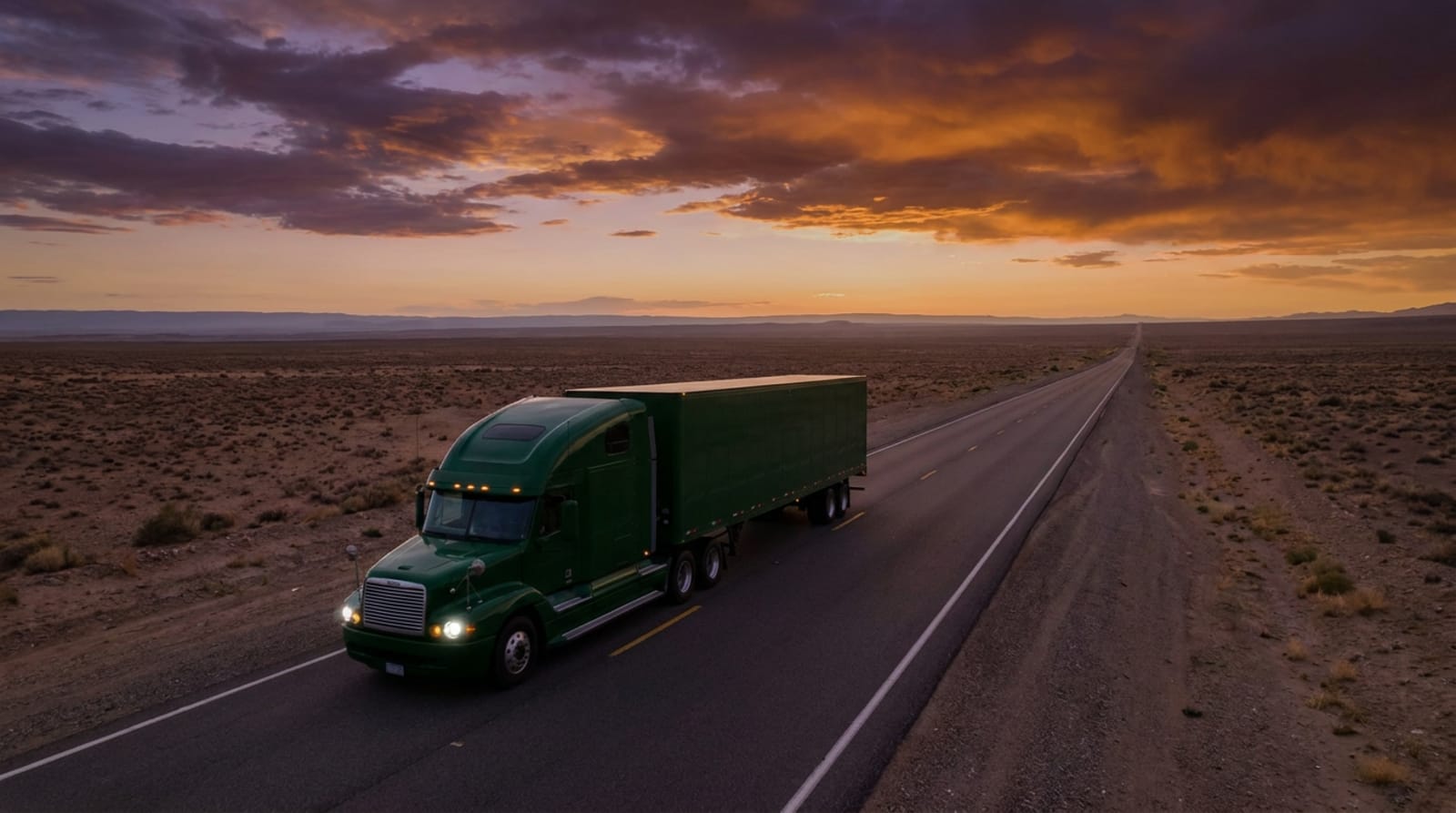
San Diego as a Freight Origin Point
Most shippers think of Los Angeles when they picture Southern California freight, but San Diego handles a substantial and growing volume of cargo. The Port of San Diego moves vehicle imports, consumer goods, and bulk commodities. The Otay Mesa and San Ysidro border crossings add cross-border manufacturing freight to the mix, and the region's network of distribution centers serves pharmaceutical, defense, agricultural, and retail supply chains.
The interstate infrastructure reinforces San Diego's position. I-8 heads east toward the Arizona market. I-15 runs northeast toward the Inland Empire and Las Vegas. I-5 connects north to Los Angeles and south to the border. That geometry means a truck leaving San Diego can reach Phoenix, Tucson, Los Angeles, or the Central Valley without touching a secondary highway. For shippers, that translates to reliable transit times and consistent lane availability.
Green Lantern Trucking built its operation around this geography. Our home terminal at 18616 Bee Canyon Road, Dulzura, CA 91917 positions us to cover drayage at the Port of San Diego, pickup runs in the city's industrial corridors, and outbound lanes to every region of the lower 48 states. We do not broker loads — we own the equipment and employ the drivers.
Port Drayage: Moving Containers from the Port of San Diego
Drayage is the short-haul leg that connects a seaport container terminal to a warehouse, distribution center, or rail ramp. It sounds simple, but port drayage is one of the most time-sensitive and operationally complex moves in freight. Appointment windows, chassis availability, container release timing, and demurrage fees all create pressure to execute quickly and correctly.
Green Lantern Trucking handles port drayage at the Port of San Diego as part of our full-service offering. Learn more on our Specialized Services page, which covers drayage alongside flatbed and heavy haul. For a detailed breakdown of how container drayage works and what shippers should expect, read our post Port Drayage Explained.
When you book drayage with an asset carrier rather than a broker, you deal with one company from appointment scheduling through container return. There is no relay to a third-party dray carrier, no communication gap, and no finger-pointing if a container misses its appointment window. We schedule, we dispatch, we deliver.
Major Outbound Lanes from San Diego
The most active outbound lanes from San Diego follow predictable corridors. The I-8 East lane to Phoenix and Tucson is heavily used for manufacturing parts, produce, and retail goods. The I-15 North lane to the Inland Empire, Las Vegas, and Salt Lake City serves distribution centers and regional warehouses. The I-5 North corridor to Los Angeles and on to the Central Valley carries agricultural, pharmaceutical, and consumer freight daily.
Longer hauls follow these same corridors into the national network. Loads destined for Texas typically move via I-10 through Phoenix. Freight headed to the Pacific Northwest combines I-5 and I-15 depending on the final destination. East Coast shipments generally travel I-10 or I-40 across the Sun Belt before turning north.
If your freight moves on a regular schedule between San Diego and a fixed destination, a dedicated lane agreement locks in capacity and often reduces per-mile cost. Read our post Dedicated Lanes Explained to understand how those agreements are structured and whether they make sense for your volume.
FTL vs. LTL Out of San Diego
Whether you need full truckload or less-than-truckload service from San Diego depends on shipment size, urgency, and how much handling your freight can tolerate. FTL moves your load on a single trailer from origin to destination with no intermediate stops. LTL consolidates your freight with other shippers' cargo, which reduces cost but adds transit time and handling.
For high-value freight, time-sensitive loads, or shipments that fill more than roughly half a trailer, FTL is usually the right call. For smaller, durable shipments where cost per pound matters more than speed, LTL works well. Our post FTL vs. LTL: How to Choose walks through the decision in detail, and our FTL & LTL services page covers what Green Lantern Trucking offers on both sides.
Green Lantern Trucking moves both FTL and LTL shipments originating in San Diego. Because we own our fleet rather than brokering to outside carriers, we can offer consistent service standards across both load types rather than simply shopping your load to whoever has open capacity.
Temperature-Controlled and Specialized Freight
San Diego's agricultural regions produce fresh produce, flowers, and nursery stock that require reefer service year-round. The region's biotech and pharmaceutical sector ships temperature-sensitive materials that cannot tolerate deviation from specified ranges. And the defense and manufacturing industries generate oversized loads that require flatbed equipment.
Green Lantern Trucking operates reefer trailers for temperature-controlled moves and flatbed equipment for heavy haul and oversized freight. If your shipment requires refrigeration, see our post Reefer Shipping 101 for guidance on how temperature-controlled freight is managed and what to look for in a reefer carrier. For flatbed and heavy haul specifics, visit our Specialized Services page.
Temperature-controlled lanes out of San Diego to Arizona, California's Central Valley, and the Pacific Northwest move regularly. We dispatch reefer equipment 24/7, which matters when a load has a tight delivery window and cannot sit waiting for a driver.
Cross-Border Freight Considerations
San Diego's position on the U.S.-Mexico border creates a distinct category of freight movement. Manufacturing operations in Tijuana and Baja California produce components and finished goods that cross into the United States at Otay Mesa, requiring customs clearance and domestic onward transportation. Green Lantern Trucking handles the domestic leg of those moves.
Cross-border freight introduces variables that don't exist in purely domestic shipments — customs hold times, document requirements, and broker coordination on the Mexico side. Our team understands the Otay Mesa crossing and can work around typical delay patterns when planning transit times. If your supply chain includes a Mexico manufacturing operation with U.S. distribution, call us at (619) 625-0147 to discuss how we fit into that workflow.
We do not operate in Mexico ourselves, but we work regularly with shippers who use us as their domestic carrier once freight has crossed. That division of responsibility keeps compliance clean and accountability clear.
Booking a San Diego Freight Shipment with Green Lantern Trucking
Booking starts with a quote. Tell us origin, destination, freight type, weight, dimensions, and any special handling requirements. We will give you a direct answer on availability and rate — no brokerage runaround, no load-board shopping. Our dispatch team operates around the clock, so a shipment that needs to move tonight does not have to wait until Monday morning.
Visit our online quote page to submit shipment details, or call us directly at (619) 625-0147. If you want to understand what affects your freight rate before you call, read our post What Drives Freight Shipping Costs for a plain-language explanation of the factors that move the needle.
Green Lantern Trucking serves all 48 contiguous states. Whether your San Diego freight is heading to a Phoenix distribution center, a Chicago terminal, or a warehouse in Atlanta, we have the equipment and the lanes to move it.