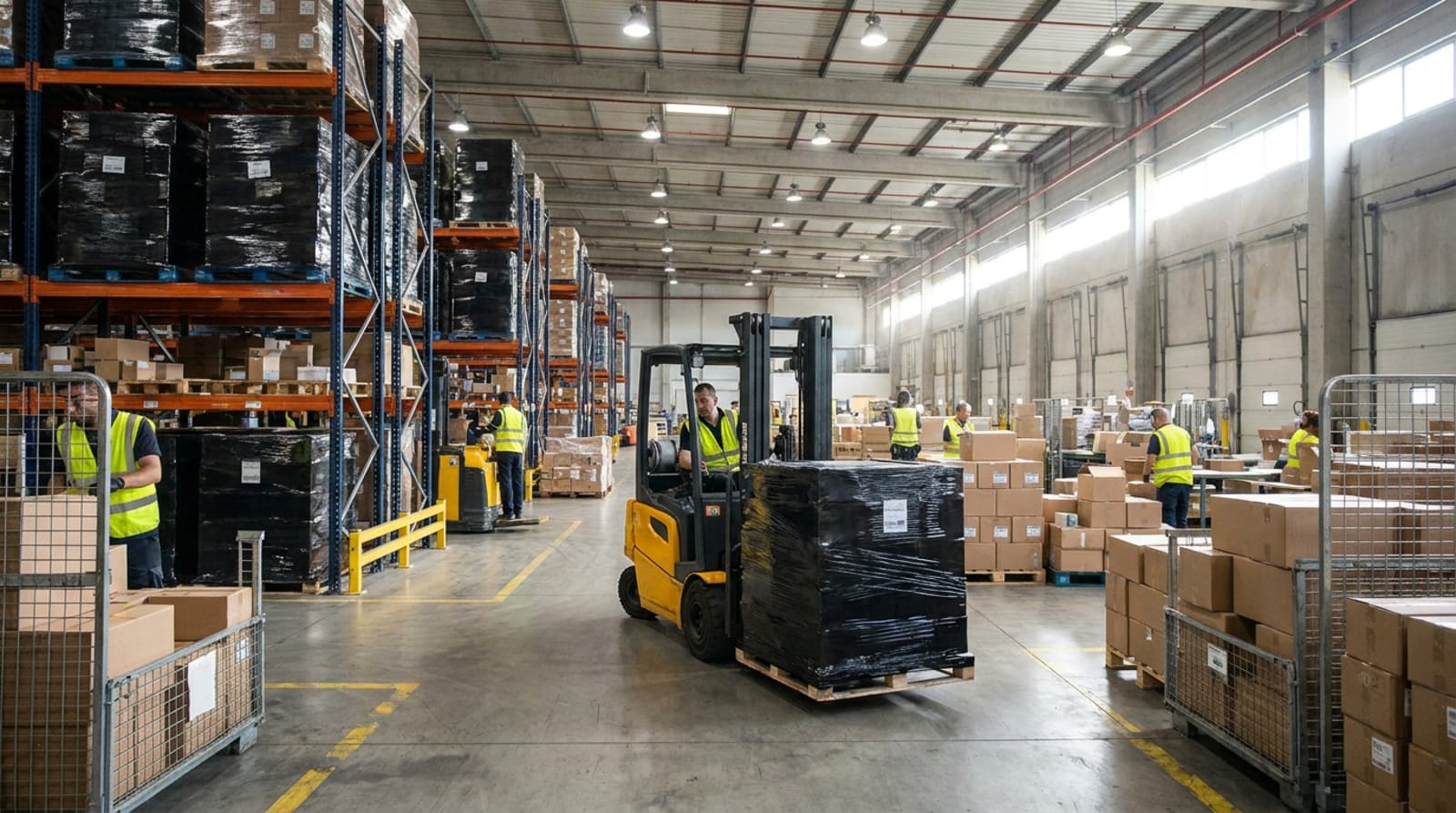
Why Freight Preparation Matters
The quality of your shipment preparation directly affects transit time, damage rates, and final cost. A driver who arrives to find unprepared freight — loose product, unlabeled boxes, no bill of lading — has two options: wait while you fix it or note the exceptions on the BOL and proceed. Either way, you lose time and potentially accuracy. If freight is damaged because pallets were improperly built, the claim investigation will start by looking at how the freight was packaged.
Carriers set pickup windows. When a driver arrives at a dock, they expect to load and go. Dwell time — time spent waiting at a shipper's dock beyond the standard window — can result in detention charges. Getting your freight ready before the truck arrives is not just good practice; it is what you agreed to when you booked the shipment.
This guide covers the core preparation steps for standard truckload and LTL freight. For service-specific guidance — reefer, flatbed, or heavy haul — see the relevant articles on our Services page. For background on the difference between FTL and LTL and how each service affects handling, read FTL vs. LTL: How to Choose.
Palletizing Freight Correctly
Palletizing is the process of stacking and securing freight on a pallet so it can be moved by forklift and transported safely on a truck. A properly palletized shipment is stable, uniformly stacked, does not overhang the pallet edges significantly, and is wrapped tightly enough to hold together during transport and handling.
Use pallets that are in good condition — no broken boards, no protruding nails, no soft spots. Standard 48x40 GMA pallets are the industry default and fit truck trailers and dock equipment universally. Stack freight uniformly: heavier items on the bottom, lighter on top, with weight distributed evenly across the pallet face. Avoid bridging — stacking items that span a gap between other items — because bridging creates structural weakness that fails during transit.
- Use structurally sound pallets — inspect for broken boards and damage before loading
- Stack heaviest items at the bottom, lighter items on top
- Keep product within the pallet footprint — significant overhang creates instability and may prevent loading
- Apply at least three horizontal bands of stretch wrap from base to top, with each band overlapping the previous by at least half
- Corner boards add protection for carton-packed freight on pallet edges
- Maximum pallet height is typically 60 inches including pallet; confirm with your carrier if you are close to that limit
Stretch-Wrapping and Securing the Load
Stretch wrap is the clear plastic film wound around a pallet to hold the load together during transport. It is not optional. Unwrapped freight shifts during transit, and shifting freight damages product and creates unsafe trailer conditions. Stretch wrap should be applied with tension — loose wrap does not hold anything — and should cover the freight from near the base of the pallet to the top layer.
For heavy or dense freight, consider using strapping in addition to stretch wrap. Banding straps applied horizontally or vertically over stretch-wrapped pallets provide additional restraint against shifting. This is particularly important for loads moving LTL, where the pallet will be handled at terminal transfer points in addition to pickup and delivery.
For freight that is moisture-sensitive, a layer of plastic sheeting under the stretch wrap provides additional protection. Reefer trailers and dry van trailers provide weather protection from the outside, but condensation inside a trailer — particularly on long hauls or in humid corridors — can affect exposed product. If your freight cannot tolerate moisture exposure, package accordingly and note it on the BOL.
Labeling Requirements
Every piece of freight — every pallet, every carton shipped loose, every skid — needs a legible shipping label. Labels should include shipper name and address, consignee name and address, purchase order or reference number, piece count within the shipment, and any special handling markings (fragile, this side up, temperature requirements). For LTL shipments, your carrier will provide a PRO label or BOL barcode that must also be applied.
Labels should be placed on the side of the pallet where they are visible when the pallet is in the trailer — not on top where they will be obscured by stretch wrap or adjacent freight. Apply labels to a flat, clean surface and protect them with clear tape if they will be exposed to moisture during loading or transit. A label that falls off or becomes illegible in transit creates a serious problem at the receiving end.
For hazardous materials, USDOT placarding and labeling requirements apply and are not optional. Hazmat shipments require the shipper to provide proper classification, packing group, UN number, and hazmat declaration documentation. If you ship hazmat, work with your carrier before the first load to make sure your preparation meets regulatory requirements. Green Lantern Trucking can advise on what is needed for your specific commodity.
Completing the Bill of Lading
The bill of lading (BOL) is the legal document that governs a freight shipment. It serves as the contract between shipper and carrier, a receipt for the freight, and the document that travels with the shipment to delivery. Errors or omissions on the BOL create problems at every subsequent step — pickup confirmation, in-transit tracking, delivery, invoicing, and claims.
A complete BOL includes: shipper name and address, consignee name and address, carrier name, shipment date, piece count, freight description, weight, dimensions, and freight class for LTL shipments. Special instructions — appointment required, lift gate needed, residential delivery, temperature requirements — should be stated clearly, not assumed. If your freight is high-value, state the declared value on the BOL. If it contains hazmat, the hazmat declaration belongs on or attached to the BOL.
Freight class is one of the most consequential fields on an LTL BOL. Misclassified freight can result in a billing adjustment after delivery — sometimes a significant one. Our post Understanding Freight Class and NMFC explains how the classification system works and how to look up the correct class for your commodity. Getting it right upfront prevents disputes later.
Preparing for Specific Freight Types
Standard palletized dry freight follows the guidelines above. Other freight types require additional preparation. Temperature-sensitive freight must be at the required temperature before loading — the carrier maintains temperature in transit, but you are responsible for pre-conditioning the product. Reefer loads also require the trailer to be pre-cooled before loading; confirm this with your carrier when scheduling pickup.
Oversized or heavy haul freight that moves on flatbed equipment requires different securement — chains, binders, tarps depending on the commodity — and those are carrier responsibilities, but the shipper needs to have the freight staged and accessible for flatbed loading, which typically means ground level or a loading zone that allows side or top access. Read our post Shipping Heavy Equipment: A Complete Guide for details on heavy haul preparation.
High-value freight warrants additional attention regardless of equipment type. Consider sealed trailers with numbered seals, GPS tracking, and documented count at pickup and delivery. Discuss your security requirements with your carrier before booking. Call Green Lantern Trucking at (619) 625-0147 to talk through requirements for your specific freight before the first shipment moves.
What to Have Ready When the Driver Arrives
When the driver arrives, you should have: freight fully palletized and stretch-wrapped, all labels applied and legible, BOL completed and signed by the shipper, forklift or dock equipment available to load, and a dock or staging area ready. If the load requires a sealed trailer or specific loading sequence, communicate that when booking, not when the truck is at the door.
The driver will inspect the freight before accepting it and note any exceptions on the BOL — damaged packaging, pieces that do not match the count, pallets that are not properly wrapped. Those notations travel with the shipment and become part of the record if there is a claim. If the driver notes an exception and you disagree, you can note your own exception on the BOL at pickup.
Green Lantern Trucking dispatches from 18616 Bee Canyon Road, Dulzura, CA 91917 and covers all 48 contiguous states. For shipments originating in Southern California, we are frequently positioned to provide same-day or next-day pickup. To schedule a pickup or get a quote, visit our online quote form or visit our About page to learn more about how we operate as an asset-owned carrier. Freight that is ready when we arrive moves faster and arrives better — preparation is the first mile of every successful shipment.