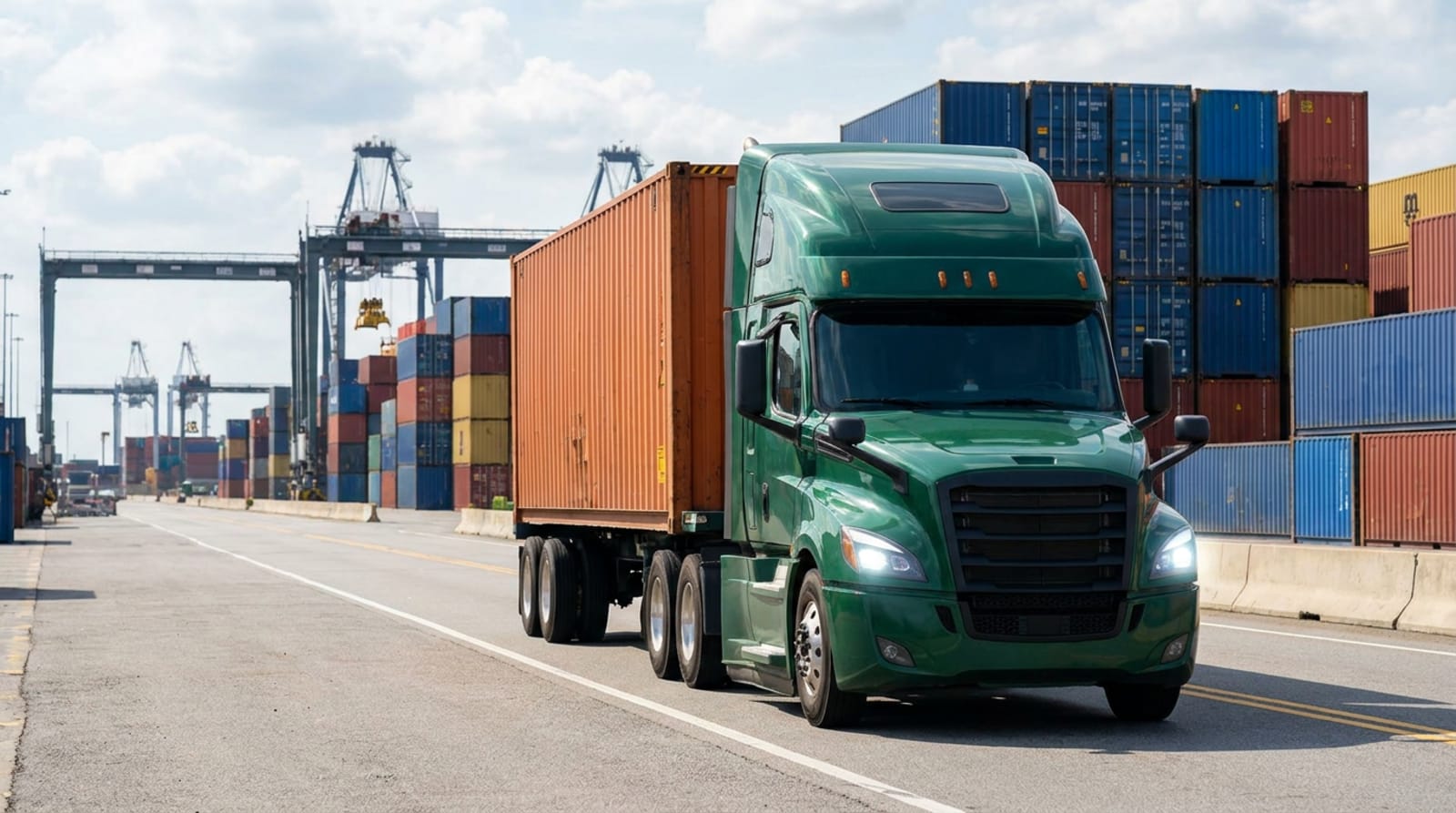
What Is Port Drayage?
Port drayage refers to the movement of containerized cargo between a marine terminal and the next point in the supply chain — typically a warehouse, distribution center, rail ramp, or cross-dock. The word "drayage" historically referred to low-wheeled carts used to haul heavy loads short distances. In modern logistics, it describes the short-haul trucking segment that connects ocean shipping to overland freight.
Despite the short distances involved — drayage moves often run 30 to 200 miles — they are among the most operationally complex moves in the supply chain. Port terminals operate on strict appointment systems, impose per diem and demurrage charges when containers are not retrieved on time, and run in environments where congestion, chassis availability, and terminal gate hours all affect execution.
For importers using the Ports of Los Angeles and Long Beach — the largest container gateway in North America — drayage is the first domestic link in a supply chain that may span thousands of miles. Getting a container out of the terminal on the first available day and into a warehouse or onto a rail car quickly is essential to controlling total landed cost. Green Lantern Trucking operates out of San Diego and Southern California, giving us strong positioning for port drayage on both ends of the LA/Long Beach complex.
Demurrage and Per Diem: The Costs of Slow Drayage
Two charges drive urgency in port drayage: demurrage and per diem. Demurrage is charged by the ocean carrier or terminal when a container sits inside the terminal beyond the free time allowance — typically four to seven calendar days after vessel discharge, though terms vary by carrier and contract. Once free time expires, demurrage accrues daily and can reach significant sums quickly, especially for high-value cargo.
Per diem is charged by the chassis provider or ocean carrier when the chassis (the wheeled trailer frame that holds the container) is kept out beyond the allowed time. If a drayage carrier picks up a container and takes it to a warehouse where it cannot be unloaded immediately, the chassis keeps running on per diem. Slow receivers, warehouse appointment delays, and lack of forklift availability all feed into avoidable per diem charges.
Experienced drayage carriers manage these windows proactively. They track vessel arrivals, monitor container availability in the terminal system, book terminal appointments as soon as the container is dischargeable, and coordinate with the receiver to ensure the container can be unloaded and the chassis returned promptly. An asset-owned carrier like Green Lantern Trucking has the operational infrastructure to manage this process — brokers sourcing spot drayage trucks often do not.
Types of Drayage Moves
Drayage is not a single type of move. Several sub-types are common in Southern California import logistics. Live unload drayage is the simplest — the driver goes to the port, picks up the container, drives to the receiver, waits while the freight is unloaded, and returns the empty container and chassis to the terminal or a depot. This works when the receiver can unload within the driver's available hours.
Drop-and-hook drayage involves the driver dropping the full container at the receiver's yard and picking up a pre-staged empty to return. This is faster for the driver and more efficient when receivers have chassis space. Transload moves take containers to a nearby warehouse where ocean containers are unloaded and freight is re-consolidated into domestic trailers for the next leg of the journey — common when ocean container sizes do not match domestic distribution needs.
- Live unload: Driver waits at receiver for unloading, returns empty container and chassis.
- Drop-and-hook: Driver drops full container, picks up pre-staged empty — faster turns.
- Transload: Container freight moved to a warehouse and re-loaded into domestic trailers.
- Rail ramp drayage: Container moved from port to an intermodal rail facility for long-haul inland movement.
- Pier pick and store: Container picked up and stored at a third-party yard while delivery is coordinated.
Southern California as a Drayage Market
The Ports of Los Angeles and Long Beach together handle more container volume than any other port complex in North America. The surrounding logistics infrastructure — warehousing, distribution centers, intermodal facilities, and cross-docks — has grown to match that volume, making the Inland Empire (San Bernardino and Riverside counties) one of the densest logistics clusters in the world.
Drayage activity in this market is intense and competitive. Terminal appointments fill quickly. Chassis availability fluctuates. Harbor congestion, construction, and weather can all affect terminal gate hours and wait times. Carriers operating in this market need familiarity with the specific terminals, their gate systems, and the operational patterns that affect turn times.
Green Lantern Trucking is based in San Diego County, with coverage across Southern California and the broader Southwest corridor. Our proximity to the LA/Long Beach complex and our familiarity with Southern California freight patterns makes us a natural partner for importers who need reliable drayage capacity in this market. We also move freight from the port directly into dedicated lane programs for shippers with recurring inland volume — see our post on dedicated freight lanes for how that works.
Chassis: The Hidden Complexity in Drayage
The chassis — the wheeled frame that carries the ocean container — is a source of friction that surprises many shippers new to drayage. Chassis in the LA/Long Beach complex are owned and managed by several different chassis pools and individual ocean carriers. Availability is not uniform, and drayage carriers must navigate between pool options to find equipment for each move.
When chassis availability tightens, drayage turns slow. A driver who cannot find a chassis cannot pick up a container, and every day that container sits in the terminal is another day of demurrage accumulating. Experienced drayage carriers maintain relationships with multiple chassis pools and track availability actively to minimize the impact of chassis shortages on their pickups.
This is another area where asset-owned carriers have an advantage. While most drayage carriers do not own their own chassis fleet (chassis ownership in the US port market is complex), experienced carriers with established pool relationships can access chassis more reliably than spot operators who enter the market only when there is an immediate load. If you are importing through Southern California ports and want more reliability on the first domestic mile, contact Green Lantern Trucking to discuss your drayage needs.
Drayage and the Rest of Your Supply Chain
Drayage does not exist in isolation. The speed and reliability of your container retrieval affects everything downstream: warehouse receiving schedules, inventory availability, production line timing, and customer delivery commitments. A container that sits in demurrage for five extra days because a drayage carrier missed the appointment window cascades through every subsequent step.
Shippers who import regularly benefit from treating drayage as a strategic carrier relationship rather than a commodity purchase. A drayage carrier who knows your terminals, your receivers, and your typical freight profile can anticipate problems and resolve them faster than a broker dispatching a new driver for each load. The relationship pays off most visibly during peak season — when terminal congestion is worst and chassis availability is tightest.
For importers who want to extend that reliability beyond the port, Green Lantern Trucking's asset-owned fleet can carry freight from the drayage move into longer-haul dry van, reefer, or flatbed service across all 48 contiguous states. Our San Diego freight services page covers the outbound lanes we run regularly. If your container is moving through Southern California ports, we can handle the full movement from terminal gate to final destination.
Getting Started with Green Lantern Trucking Drayage
Setting up drayage service starts with a few pieces of information: your ocean carrier and vessel schedule, the terminal where your containers will discharge, your container sizes (20', 40', 40' high cube are most common), your receiver address, and the typical volume and frequency of your imports. With that information, we can assess our capacity fit and discuss how to structure the service.
Drayage pricing typically includes a base move rate plus applicable surcharges — fuel, chassis split, pre-pull (picking up the container ahead of the delivery appointment), and congestion fees during peak periods. Transparent pricing upfront avoids invoice surprises — ask your carrier to itemize surcharges in writing before the first move.
Green Lantern Trucking dispatches 24/7 at (619) 625-0147. Whether you are moving a single container or building a recurring drayage program for consistent import volume, we want to understand your freight and put the right capacity behind it. Freight that always finds the light — that includes the first mile out of the port.